
Standing out to agents & producers
This is the second in a series of posts on First Draft 2026, a day-long TV Foundation symposium in March 2026.
In pitching, packaging and selling ideas, your perspective as a writer -who you are- is your “big point of elevation”. Agents and producers are looking to buy into you as a person.
When establishing contact through email, make yourself stand out.
Show how hard you’ve worked so far, who you know in the industry (someone you have genuine contact with- more on this in next month's post) , what you aspire to and which writers you admire- indeed it is wise to target the agents who represent these writers, and companies who make work with those writers.
Or better still, target these agents’ “junior” associates; they are still building their roster. At production companies, you want to target development assistants and associates, not producers.
As well as writers who believe in their work and work hard, agents and companies are looking for writers who can write confidently about a difficult subject. Whilst we might send a couple of scripts to an agent, when pitching to those dev assistants and associates, what is the one project you are most excited about? The one you have really worked on and can back?
If it is a TV pilot, know where the series is going. However, don’t write the whole series… that’s free labour! Be confident and concise. Set up a meeting to share more.
If you are then invited to a general meeting (or “a general”, as they are known) by a production company, there are two schools of thought:
1) If you are good at pitching, you may want to send the company a one-page pitch document in advance, which you can follow up on in detail during the general.
2) If you prefer a more conversational approach, then embrace the general as a space to talk about how you like to write, what you like to watch. Within that you can throw some ideas in the air and see what sticks. After the general would then be the time to send them a more formal pitch document, building on what they responded to best.
The key in either approach is to back yourself, to believe in your work and want it. And then to the pitch document, where specificity is key.

Whilst comparisons can be useful for establishing tone, you have to be careful of when and how you use them. If your show really is “Succession meets Normal People”, don’t tell them… prove it in the pitch. As with a script, a pitch should SHOW rather than tell: a comedy pitch should have jokes, a thriller pitch should be thrilling.
A pitch should also have story, not just texture and themes. Explain your twists, this is a selling document. Be specific! Avoid shorthand generic language such as “then a cataclysmic event changes everything”.
If you don’t know the end, give them an episode beat instead. Indeed, for TV, a certain kind of open-endedness is wanted. Jess Hill: “If you already know the answer, it’s more a movie than a TV show. A TV idea is exploring different corners of a question.”
Subvert expectations- go beyond your first impulse as a writer, to surprise the reader. In other words, work at your idea, and know it inside out. And this includes knowing why you wanted to write it.
Why did this idea come to you? What made you tick? Was it a particular character? Something bothering you in the real world?
This “thread from you, to and through the story” is the core of your idea; the emotional truth, that binds everyone regardless of their experiences. Agents and producers have read a million scripts; seen it all before. “Your perspective and authorial voice is the one thing that is original.”
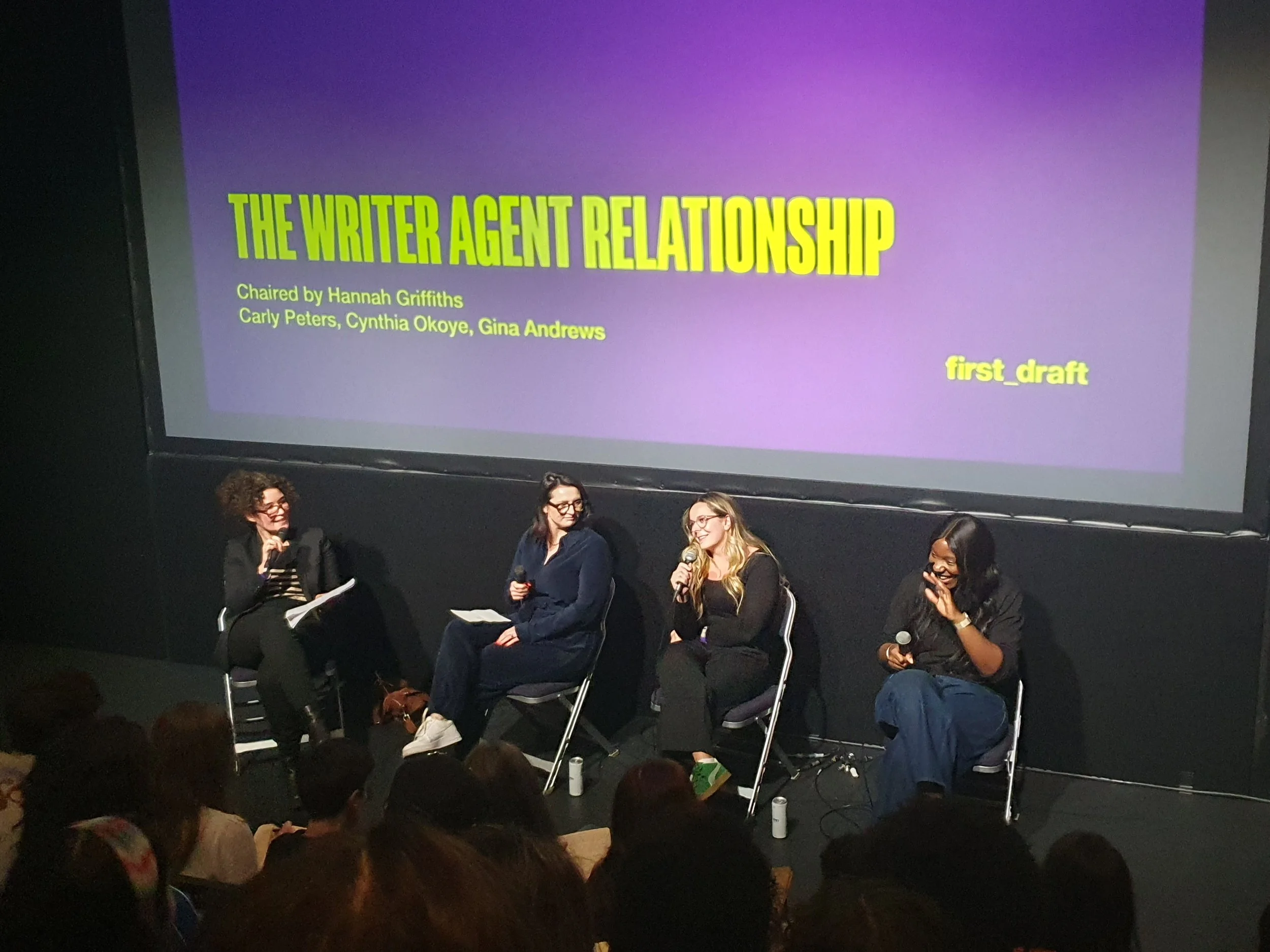
This blog paraphrases two sessions from the day at Soho Theatre: a talk on the Writer Agent relationship with agents Cynthia Okoye (Curtis Brown), Gina Andrews (The Agency), Carly Peters (United Agents), and a session on Pitching with Jess Hill (Senior Development Producer, BBC Studios), Bradley Down (Head of Development, BBC Drama), Daniel Lawrence Taylor (actor, writer, creator) and Janice Okoh (writer, creator).
-
If you enjoyed reading this blog, why not become a Patreon Supporter and help us to keep doing what we do? Only £5 a month, with big discounts + FREE access to our online monthly Write Club: www.patreon.com/c/scripteastmids/membership