
Curating Audience Emotion
Twists are often held up as the be-all and end-all of good scriptwriting.
This is nothing new, as proven by the earliest surviving work of western dramatic theory, Poetics, in which Aristotle defines as "a change by which the action veers round to its opposite”.
In tragic works, Aristotle claims these "reversals" are done best when paired with a moment of profound realisation (“recognition”), in which the protagonist changes “from ignorance to knowledge… for good or bad fortune”, in order to “produce either pity or fear” in the audience.
In other words, twists should:
-Meaningfully transform that protagonist’s one-time journey, delivering real impact, and
-Be meaningfully tied to the protagonist’s blindspot, and indeed the blindspot of all protagonists- a hidden truth that our plot will reveal for the first time (to the protagonist and/or the audience).
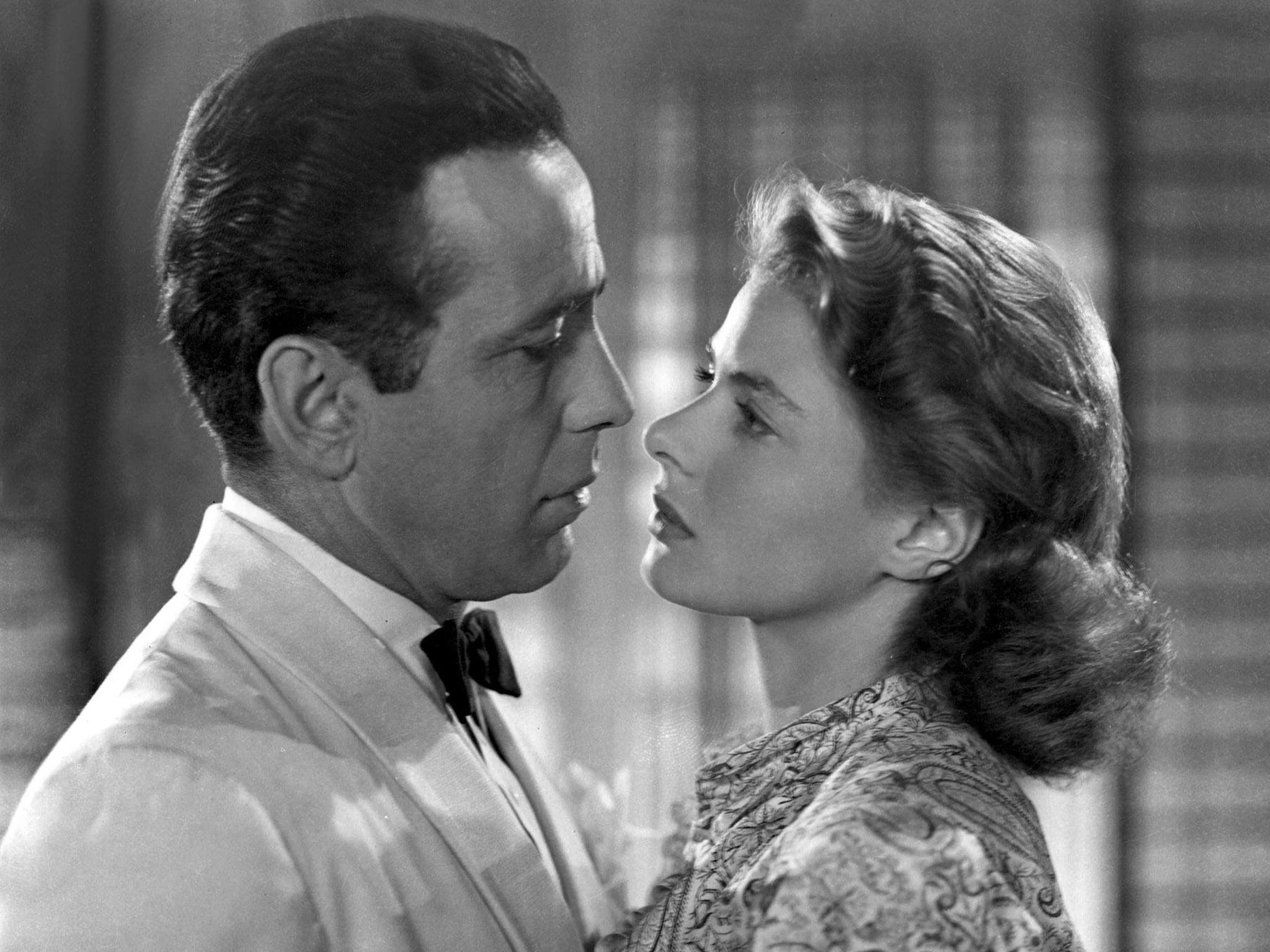
Indeed, a great reversal needn’t be new information for our protagonist, so long as it is presented as new for the viewer. A brilliant example can be found in Casablanca (1942).
Often topping “Best Ever” lists, this film has undoubtedly dated, especially around female representation. However, what cannot be denied is the mastery in which the final fifth of the film plays out- specifically, in its use of misdirection.
I have spoken about misdirection before in this blog. For me, there is no more artful a tool for the scriptwriter, using POV to build tension.
Rick (Bogart) has agreed on a plan to escape to Lisbon with the love of his life, Ilsa (Bergman), using a stolen visa. It is only in the final moments that we (and everyone else) realise he intends to get her on that plane with her freedom-fighting husband; Rick’s growth from selfish to selfless complete, and so to ours, from ignorance to knowledge.
Easy enough, you might say, however, what makes the application of this tool masterful is not so much the decision itself (which follows the trope of moral growth in classic protagonists), but the moment earlier in the film that pushes Rick towards that course of action: his helping of two Bulgarian refugees.
Annina, a newlywed, wants desperately to escape to America with her husband. She is offered an exit visa by the corrupt chief of Casablanca's police, but without a penny to her name, must pay through sexual favours. As a last hope she approaches Rick, who, in throwing a game of roulette at his dive bar in their favour, gives the young couple a different way to buy their escape.
On the surface, coming at the peak of his rekindled affair with Ilsa, Rick's act of selflessness appears to be a kind of rehearsal for his own escape; an act of faith in True Love. However, it is only upon the final act reversal, when all is made clear, that the motive behind his gesture becomes all the more ambiguous… things get clearer, and at the same time a little ambiguous.
In helping the young couple, Rick is, arguably, either:
-Helping True Love triumph, OR
-Fighting fascism
Only one can be the truth; indeed, that should be one of our two rules in applying ambiguity to our projects:
1) Ambiguity is not open-ended (sorry David Lynch, I still love you)... it is binary
2) It must only be used to serve the emotional journey of the characters (and thus, audience).
By keeping Rick’s motives hidden at a key moment of character growth, Casablanca's writers have endowed the final reversal with the greatest emotional impact (delivering that “pity or fear” Aristotle wrote of).
Ambiguity, like misdirection, like reversals, is emotional curation, pure and simple, lifting the audience higher, getting us comfortable in our assumptions, before the inevitable drop. And it is inevitable. We know a twist is coming, but we still feel it. Why? Because our emotions have been artfully curated through POV.
And what purer way is there to describe our job as writers than Curators of Audience Emotion?
Because how, when and if we choose to reveal the hidden truths littered through our script will make the difference between whether our story is merely good, or possibly even GREAT.
-
To read our entire Blog archive, with tips and advice for your scriptwriting, become a Patreon Supporter: www.patreon.com/c/ScriptEastMids
There are lots of additional benefits, including access to our monthly online co-working space, Write Club.