
The Ugly Truth about Comedy
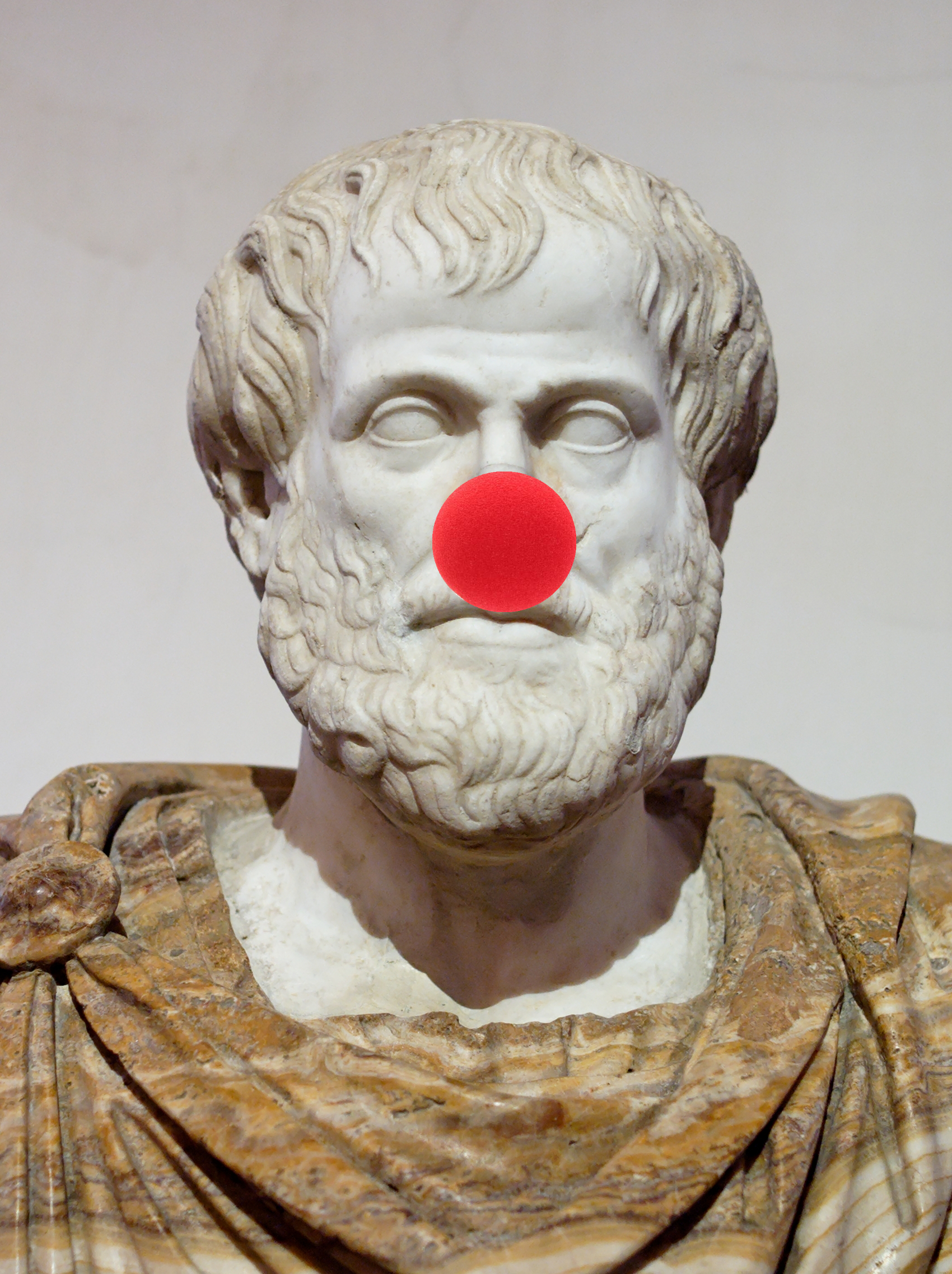
“Comedy aims at representing men as worse than they are... tragedy as better”. 1
The words of Aristotle, ancient Greek philosopher, polymath and OG scriptwriting guru. Whilst literary ‘How To’ guides abound, none is more foundational for the Western canon than Aristotle Poetics (35BCE). If we are serious about comedy, then we should listen to his words.
For Aristotle, comedy is “a species of ugliness or badness”, but in a form that is “not painful or injurous.” So is comedy “ugly” art? If truth is beauty, then is comedy a lie?
Excuse the foray into theory… whilst this won’t be funny, it may well help.
For architectural theoretician Mark Cousins, ugliness can be best defined as “matter out of place”; “the mistake… the object that has gone wrong”… moral deviance, sin. To Cousins, “ugliness does not exist as such, but only as a privation of what should have been” . 1
In other words, “ugliness”, as an idea, exists to reinforce cultural expectations for members of a community- norms which serve the survival of the species. Comedy, then, as ugly art, must purposefully disrupt expectations. It is intentionally immoral.
Indeed, many theorists and historians believe ancient comedy was inseparable from pagan rituals across Western Europe to native North American cultures and beyond; carnivals, which, whilst often mocking and goading the audience, also gave air to taboo behaviour during a time of excess, before a prolonged period of abstinence and fasting. 2&3
Commedia dell’Arte is often considered the modern form closest to comedy’s pagan roots. Like its ritualistic ancestors, it is performed with masks with a repeating cast of grotesque archetypal characters, including…
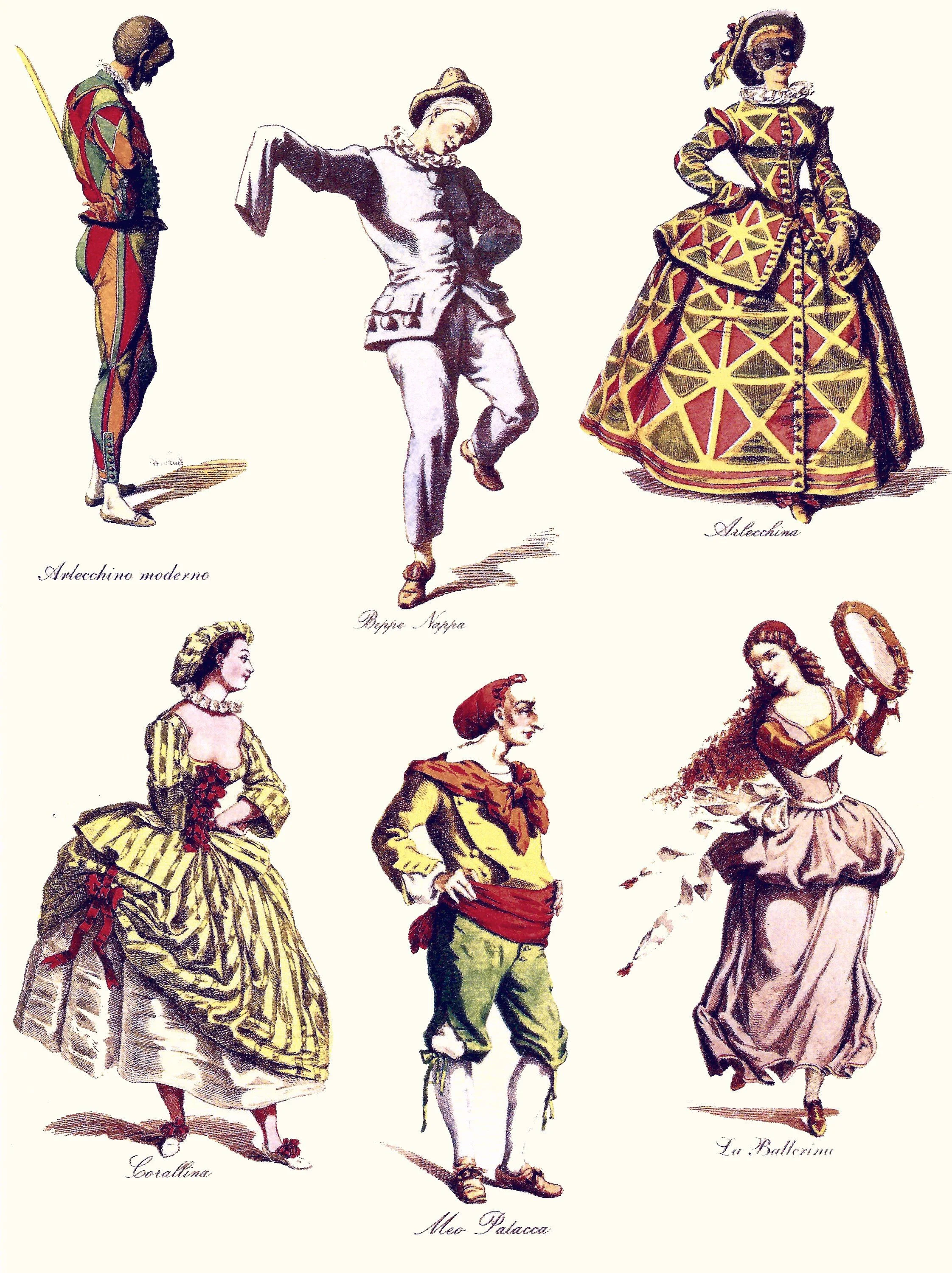
The Wisecracker: Arlecchino
The Bully/Charmer: Il Capitano
The Square: Columbina
The Dork: Il Dottore
The Goofball: Scaramuccia/Pulcinella
You may wonder what this means to you, as someone who might want to write funny things. Well, these archetypes are as alive today as they always have been. Just look at Derry Girls.
Wisecracker: Erin
Bully/Charmer: Michelle
Square: James
Dork: Claire
Goofball: Orla
This isn’t to suggest that Lisa McGee wrote these classic characters with a history book on her lap. When writing great comedy, it is impossible to not connect with these archetypes (and the others not listed here). They are simply an integral part of the collective human unconscious.
Like the natural structure of drama, we inherited what comedy is, and what it is for, from our earliest ancestors, where comedic characters were avatars for the audience’s hidden truths; for ”uncivilised” behaviours at odds with religious observance.
Through Arlecchino/Erin (or Fleabag or Chandler and many more) it is wish fulfilment- who doesn’t want to be the witty one? Through Il Capitano and the others it is a mixture of perverse pleasure and catharsis. Or to evoke Aristotle, “ugliness or badness”, but at a moral distance from ourselves, and so “not painful or injurous”.
Horror filmmaker & comedy performer Jordan Peele:
“(Comedy and horror) are the best ways for us to deal with our fears… specifically the fear of death. In both forms, the technique is tension building and release… If you’re not accessing something that feels true, you’re not doing it right.”
So whilst comedy was (and always has been) about pleasure, it also something deeper. Comedy is horror, but where we laugh instead of scream. Both come from surprise; from normative patterns established then subverted, reaching into immoral spaces.
Having started with Aristotle, I’m going to end with The Golden Girls, and a quote from the show’s creatorSusan Harris: “Write about what is difficult for you, even painful, and trust that it will come out funny.” 5
So when writing comedy, draw on your own personal horror, and trust someone else will find it funny, because, maybe, they are also (secretly) ugly too.
1 Aristotle. (1994). Poetics (S. H. Butcher, Trans.). The Internet Classics Archive. http://classics.mit.edu/Aristotle/poetics.html (Original work published ca. 350 B.C.E.).
2 The Ugly Mark Cousins, AA files, (Number 28, Autumn 1994, pp. 61 - 64)
3 For further reading on this: Melnyk M, Kasianenko A, Kapustianska O, Krypchuk M, Fisher V. Humorous nature of carnival culture. Salud, Ciencia y Tecnología - Serie de Conferencias. 2024; 3:1007. https://doi.org/10.56294/sctconf20241007
4 And further further reading: Rudwin, Maximilian J. 1885-. The Origin of the German Carnival Comedy. New York.: G. E. Stechert & co., 1920.
5 Forrester, B. (2025) Brent Forrester’s Comedy Writing Masterclass. [The Screenwriting Life]. 11/04. Available at: https://www.thescreenwritinglife.com/podcast/xzkktm3l6z5zy53-8e7m8-t5ml8-y5c87-jba94-ly2xp-razhz-xpm7x-7rtx3-fzx82-k6tl5-dhh2z-6pc2m-fsbgc-mkzkk-hgjk9-8hnn2-zhngk
If you enjoyed this blog, why not explore our Patreon? https://www.patreon.com/c/ScriptEastMids